Land banking has got Nigerians talking about farmland as an asset class. But agro real estate takes it a step further. Buying early, holding, and letting value appreciate as development catches up is a solid strategy, and it’s already reshaping how investors think about undeveloped land nationwide.
But it’s also just the entry point.
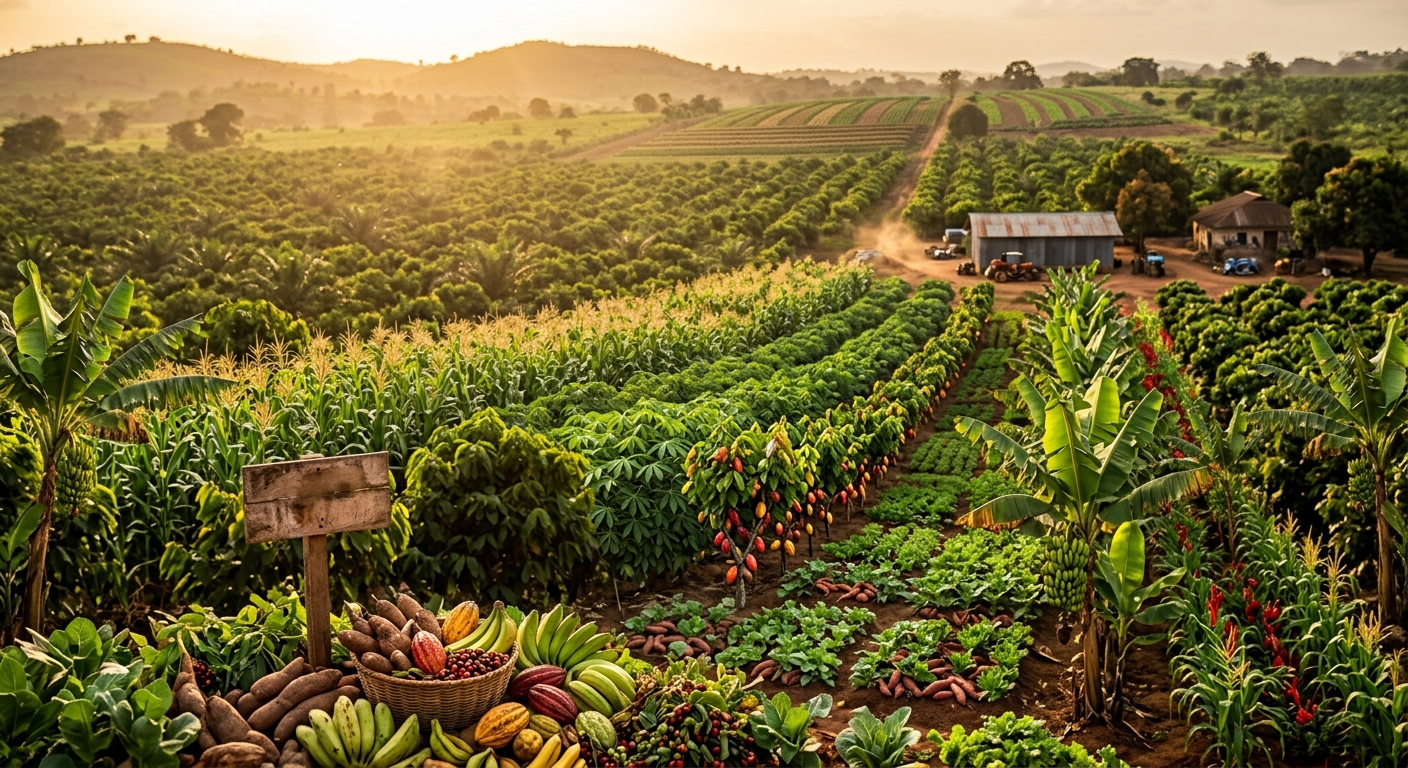
The bigger opportunity, the one most investors are still sleeping on, isn’t in owning land and waiting. It’s in agribusiness investment in Nigeria that treats farmland as productive infrastructure, not a static asset.
And the numbers make the case better than any pitch deck could.
The Importation Bill Nobody’s Pricing In
Africa spends over ₦60 billion every year importing food it can fully grow. Let that sit for a moment.
This continent holds roughly 60% of the world’s remaining uncultivated arable land, yet it remains the most food-insecure region on earth, with agriculture employing more than 60% of the workforce while still failing to feed the people who work it.
That’s not a resource deficit. It’s an execution gap. And execution gaps, unlike resource shortages, are solvable with the right structure.
Here’s where most agricultural operations in Nigeria and across Africa more broadly get stuck.
A farm can grow the crop but can’t process it. A processor is at the mercy of raw material it doesn’t own and can’t guarantee. A distributor, facing unreliable domestic supply, quietly starts importing instead.
Everyone owns one link in the chain, and the chain keeps breaking.
Why Vertical Integration Changes the Math
This is where agro real estate in Nigeria starts to look less like farmland speculation and more like infrastructure investment with a real estate wrapper.
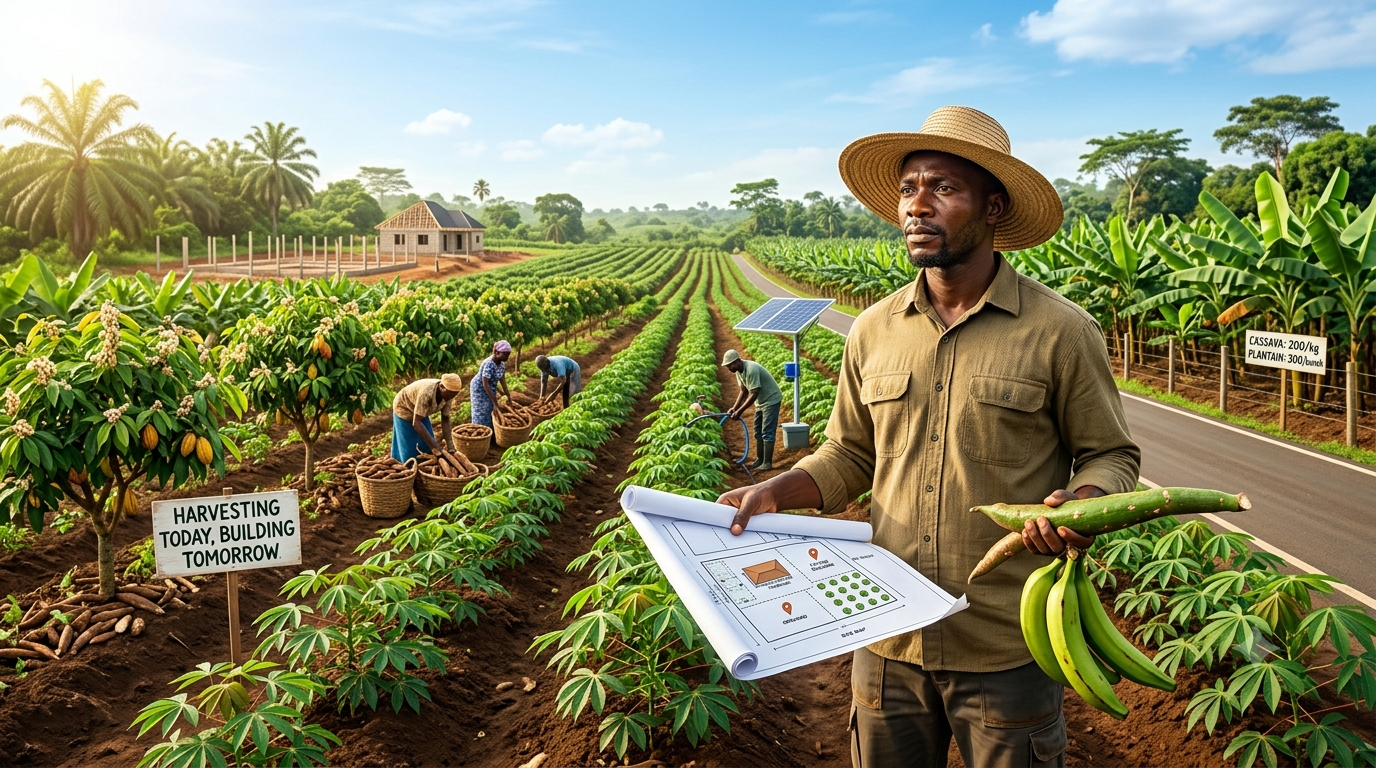
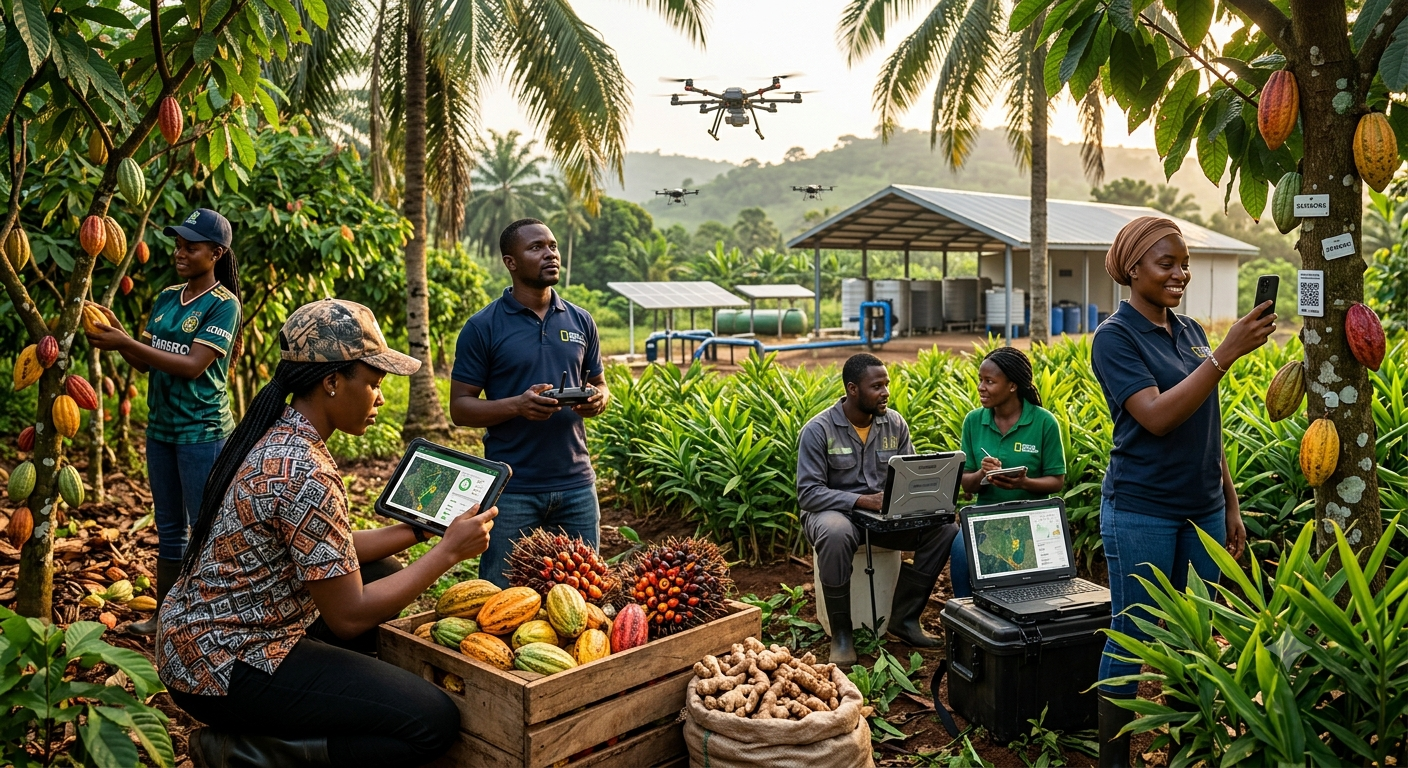
The model that’s starting to gain traction and the one worth paying attention to is full vertical integration, i.e., owning the farming, the processing, the packaging, and the distribution under one structure on deed-secured land.
Not diversifying into agriculture as a side bet, but controlling the entire value chain from soil to shelf.
Take cocoa as a case study. Africa grows the majority of the world’s cocoa supply, yet less than 30% of it gets processed on the continent. The margin between the raw export price and the finished product value—the actual money leaves Africa at every single harvest.
A farm that only grows never captures it. A vertically integrated operation does.
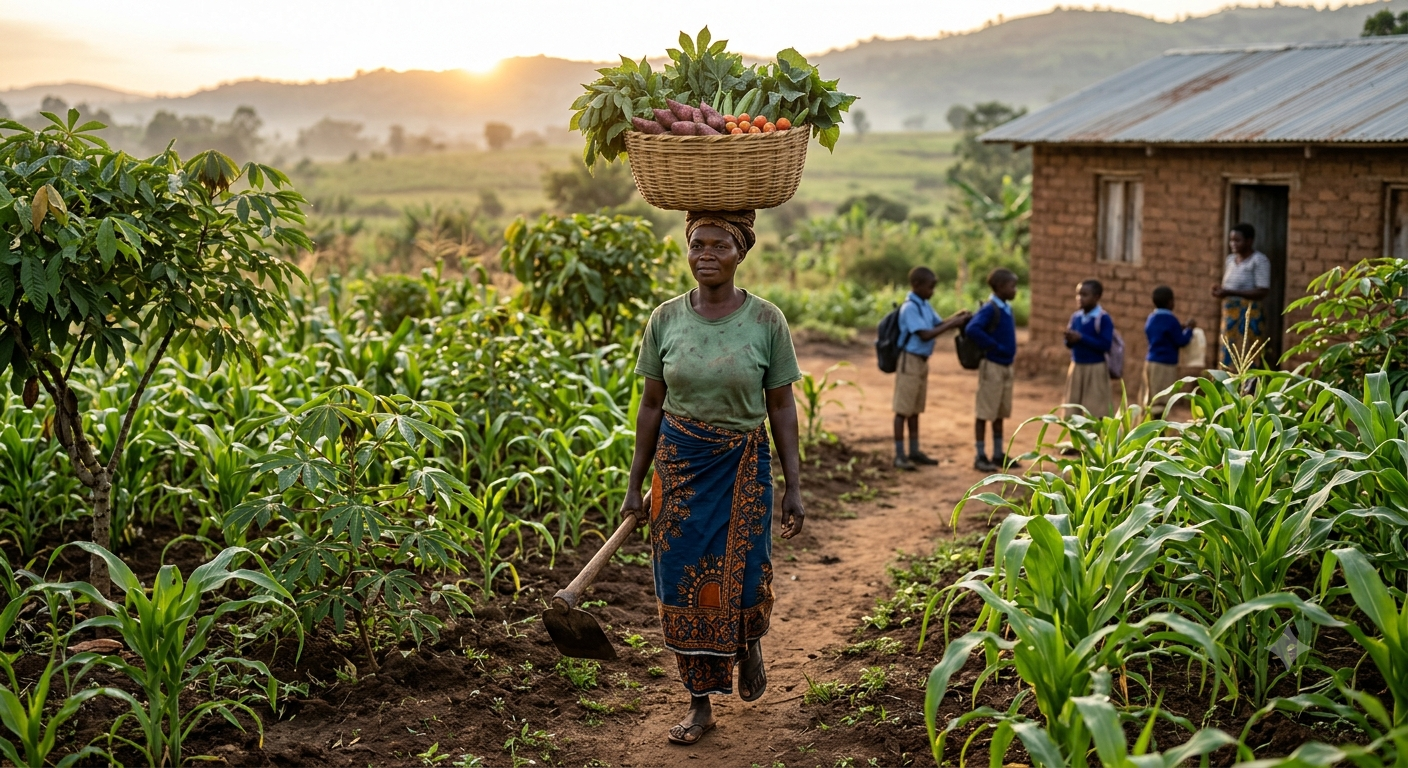
This is the structural shift behind projects like Feed Africa Global, which is building exactly this model in Nigeria: starting with 2,000 hectares of deed-secured land and scaling the full chain farming, processing, packaging, and distribution as one commercial unit rather than four disconnected businesses hoping to align.
It’s a useful example of where vertically integrated farming in Nigeria is heading and why the smartest capital isn’t just buying land anymore. It’s buying land plus the infrastructure to make that land commercially self-sufficient.
What This Means for Land Banking Going Forward
None of this makes land banking obsolete. If anything, it raises the ceiling on what land banking can become.
A hectare of raw land held for appreciation is a decent bet. A hectare inside a land-banking agriculture strategy in Nigeria that’s tied to processing and distribution infrastructure is a different asset entirely, one with cash flow potential, not just future resale value.
Urban demand backs this up. Africa’s cities are growing fast, and urban consumers can’t grow their own food; they buy from supply chains that lean harder on imports every year.
That demand isn’t a forecast. It’s already showing up in the import bill.
The investors who understand this early are the ones treating agricultural land the way real estate developers treat undeveloped urban plots: not just as something to hold, but as the foundation for a structure that generates value long after the initial purchase.
The Real Frontier
Land banking taught Nigerian investors to see farmland differently. Agribusiness done as an integrated model rather than a fragmented one is the next stage of that education. It’s where agribusiness investment in Nigeria stops being about acreage and starts being about ownership of the entire value chain.
The food import bill isn’t going away on its own. But it increasingly looks less like a national crisis and more like the continent’s largest addressable market, waiting for whoever builds the infrastructure to serve it.