Many people assume dry season tomato farming in Nigeria automatically brings high prices: when the rains stop, supply drops and money follows.
The evidence shows it is not that simple. Timing, costs, location, and storage decide who actually profits.
The assumption
The common belief is straightforward. Rainy-season harvests flood the markets and keep prices low, but once the dry season arrives, supply shrinks and prices rise.
A 2017 study by Olubunmi Abayomi Omotesho, Abdulazeez Muhammed-Lawal, Khadijat Busola Amolegbe, and Tauheed Alhaji Abubakar, published in the Journal of Agricultural Sciences (Belgrade), assessed dry-season garden-egg production among small-scale farmers in the Edu Local Government Area of Kwara State. It described high production during the rains that saturates the market, while the dry season brings scarcity of this important vegetable.
The glut
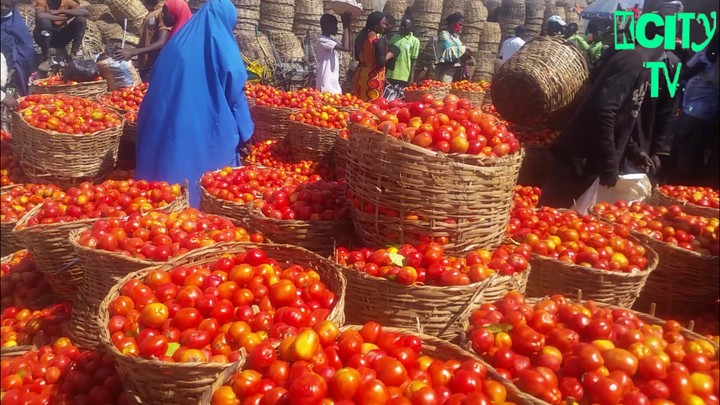
Yet when many farmers harvest at the same time, prices can fall even during the dry season. BusinessDay reported that tomato prices in Jos, Plateau State, fell from ₦31,000 a basket in December 2024 to as low as ₦15,000 in March 2025.
The drop was attributed to a market glut from increased dry-season production in areas such as Mangu, Bassa, Barkin Ladi, Jos North, and Jos South. Plateau State’s agriculture commissioner, Ishaku Bugama, also credited a dedicated tomato crop zone established by the state government for boosting local output.
Shehu Ibrahim, a Plateau farmer, put it plainly: when farmers plant more in the dry season and the harvest arrives, “the market is flooded… prices crash.” The same pattern appears elsewhere.
NAN-based reports in early 2025 put a big basket of tomatoes in Lagos at ₦13,000 to ₦15,000, against ₦140,000 to ₦150,000 in May 2024. Harvest timing, not the season label alone, often drives the price.
The real spike
The sharper price jump usually comes after the dry-season harvest ends. The National Bureau of Statistics Selected Food Prices Watch showed the average price of tomatoes rising from ₦1,104.85 per kg in March 2026 to ₦1,177.92 in April (a 6.60 percent rise) and then to ₦1,560.56 in May (a further 32.48 percent jump).
That April-to-May increase was roughly five times the March-to-April rise.
In a June 2026 interview with the News Agency of Nigeria, Rabiu Zuntu, Kaduna State Chairman of the Tomatoes Growers and Processors Association of Nigeria, said the price surge was seasonal and that supplies would improve once wet-season harvesting began. NAN reported that a 50 kg basket that cost ₦18,000 to ₦20,000 in January had reached ₦100,000 to ₦130,000 by late June, depending on variety.
Zuntu also linked the May–June scarcity to climate change, citing unpredictable rainfall and extreme heat that limit production in major northern states such as Kaduna and Kano.
For a household buying a few kilograms each week, a one-unit jump means a noticeably higher food bill. For a farmer still holding stock, it can be the difference between covering costs and falling short.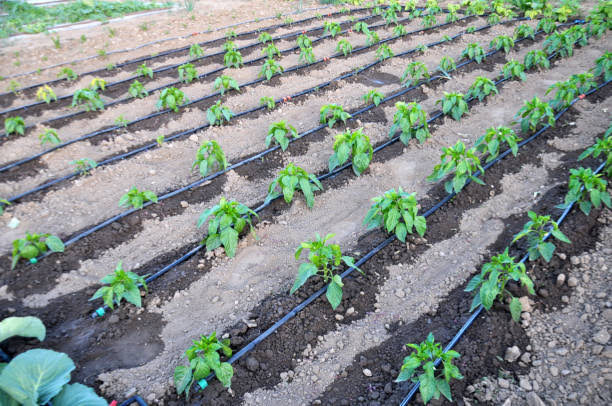
Costs bite.
Even when retail prices look attractive, production costs can leave margins thin. In July 2026, Oyeleke Bola, National President of the Tomato and Orchard Producers Association of Nigeria, said the cost of cultivating one hectare of tomatoes has risen from about ₦300,000 to nearly ₦2.5 million. That figure reflects overall production costs amid low rainy-season harvests and high input prices.
(Note that NAN has applied the abbreviation TOPAN to both Zuntu’s and Bola’s groups in separate reports; the full names above are used here to keep the two bodies distinct.)
A 2011 study of fadama vegetable production in Oyo State listed irregular fuel supply and frequent pump breakdowns among the main constraints. Research published in 2023 on dry-season okra farming in Adamawa State identified lack of access to water and high equipment costs as leading problems. These expenses—diesel, pumps, repairs, labor—eat into any seasonal price advantage.
Where you sell matters.
Location changes the price farmers and consumers face. In its April 2026 Selected Food Prices Watch, the National Bureau of Statistics recorded average retail prices of ₦1,600.73 per kg in Bayelsa and ₦730.48 per kg in Plateau.
The gap likely reflects distance from major producing areas, higher transport costs, and local demand. Bola noted in the same July remarks that moving tomatoes from producing states to consumer markets has become more expensive because of poor roads, traffic delays, and rising logistics costs.
These NBS figures are retail averages, not the prices farmers receive at the farm gate, so the difference between what consumers pay and what producers earn can be substantial.
Timing and storage
Smart farmers and investors respond by controlling when they sell and reducing risk. In the same June 2026 interview with NAN, Zuntu appealed for more cold-storage facilities, saying improved storage would reduce post-harvest losses and help stabilize prices year-round.
A 2021 study by Abdullahi Saleh and colleagues at the Federal University of Kashere examined tomato production in the Yamaltu-Deba Local Government Area of Gombe State. It found returns of ₦0.67 per naira. invested in the dry season against only ₦0.18 in the rainy season, with net income of ₦154,444 per hectare in the dry season versus ₦39,725 in the rainy season.
The same study named lack of storage and processing facilities as an obstacle to large-scale production. Practical steps include staggered planting so not everyone harvests at once, advance contracts with buyers, basic storage or cold-chain links, and targeting markets closer to the farm.
Dry-season tomato farming in Nigeria can pay. The winner is the farmer who controls timing and storage rather than the one who simply plants because the calendar says the dry season has arrived.