José Tiago de Sousa is an economist, a PhD candidate in Climate Change and Sustainable Development Policies at NOVA FCT—in partnership with the University of Lisbon’s Institute of Social Sciences—and an ESG strategist. Originally from Mindelo (Vila do Conde), he holds a Bachelor’s in Economics and a Master’s in Finance from the University of Porto’s Faculty of Economics (FEP). He has twice received the U.Porto Volunteer Award (2017/2018 and 2018/2019) and was also honored with the Active Citizenship Award in its humanitarian category. He founded the association Solidarity Soul, took part in European Solidarity Corps humanitarian missions in Italy (where he met Antonio Tajani), Poland, and Turkey, and contributed to European projects on sustainability and gender equality. He has worked as a Senior Specialist in Social Responsibility and Sustainability at FEP and, among others, as an ESG Officer at TLG Global.
In this opinion piece, however, José Tiago Sousa sets aside prescriptive models and delivers a sharp critical diagnosis. He argues that the Ceuta disaster is not merely a migration crisis, but a direct, predictable consequence of Western policy failures—particularly the abrupt withdrawal of US humanitarian aid and the normalization of anti-immigrant rhetoric across Europe. For Tiago, any meaningful ESG agenda for Africa must first confront this uncomfortable reality: before we can talk about community resilience, participatory governance, or local empowerment, we must acknowledge the structural abandonment that turns African lives into geopolitical bargaining chips and treats the continent as a problem to be contained, rather than a partner to be developed.
ESG View on Ceuta’s Disaster and How It Impacts Africa – The Opinion of José Tiago Sousa
José Tiago de Sousa
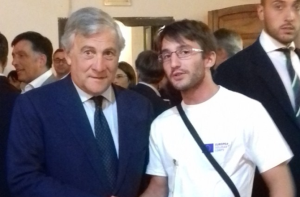
Tajani shook my hand in the rubble of Norcia and spoke of solidarity. He thanked me for my work, for my belief in a Europe that lifts up the fallen. Today, he shakes hands with populists and speaks of rejection. From what I know of him, I still believe he’s a good man—but there is a slip here. A misstep. And an error in pointing the finger at Spain.
The images washing up from Ceuta are the kind that sear themselves into your conscience. Dozens of bodies pulled from the sea. Children’s life jackets bobbing empty on the waves. Over 34 confirmed dead—and counting. Nearly 60,000 desperate souls threw themselves into the strait in a single, chaotic surge, clinging to inner tubes and cheap inflatable rings as if they were lifelines to salvation.
But if we want to talk about who is really responsible for this carnage, we need to look beyond Rabat and Madrid. We need to look straight at Washington. Because the tragedy unfolding on the shores of this Spanish enclave is not just a European border crisis—it is the direct, predictable consequence of policies championed by Donald Trump. Let us call this what it is: a massacre fueled by abandonment.
When You Gut Global Aid, You Drown the Vulnerable
First, let’s talk about the money—or rather, the sudden, brutal absence of it. Trump has systematically dismantled the international safety net that once kept the world’s most fragile populations afloat. In his second term, he did not just tweak budgets; he took a chainsaw to them. The UN Refugee Agency (UNHCR)—historically America’s largest humanitarian partner—saw its U.S. funding plummet by nearly 30% in 2025, with whispers of a total rupture looming. USAID, the very engine of American soft power and relief, was effectively defunded, leaving 55 major refugee projects in places like Bangladesh abruptly shuttered.
In Africa, the cuts were equally devastating—and in many ways, even more so. Funding for drought resilience in the Sahel evaporated overnight. Health programs in the Horn of Africa collapsed, leaving millions without access to basic care. Hundreds of thousands of displaced families across the continent—from the Lake Chad basin to the eastern Congo—lost their last lifeline. When you pull the rug from under African communities already teetering on the edge of climate collapse and conflict, you do not just create suffering; you actively manufacture a mass exodus.
What happens when you pull the financial rug out from under millions of displaced people? You do not just “save money.” You extinguish hope. You turn refugee camps into overcrowded prisons of despair. And when you close the doors to legal resettlement and cut the rations that keep families alive, you are not managing migration—you are actively creating it. You are pushing mothers and fathers into freezing water because you have left them with absolutely nothing to lose. Trump did not just cut checks; he cut the threads of survival for thousands who are now washing up dead on European shores.
The Contagion of Cruelty: Exporting the “Invasion” Playbook
But Trump’s damage is not limited to budgets. He has weaponized anti-immigrant rhetoric and exported it as a political franchise. His administration has normalized words like “invasion” to describe human movement, and his Vice President, JD Vance, has openly urged European leaders to embrace far-right populists rather than shun them. And Europe has listened. Hardliners across the continent, emboldened by Trump’s victory, did not respond to the Ceuta crisis with compassion—they used it as a political cudgel, threatening to suspend the Schengen Agreement. Italy’s foreign minister, Antonio Tajani, chastised Madrid for its “deep error” in regularizing migrants. This is not solidarity; it is the Trump playbook in action—using human tragedy to score xenophobic points.
While Spanish authorities scrambled to contain the breach, Trump cynically tweeted that the chaos was proof of the “globalist left” failing. He warned Americans, “This is what we will look like.” The irony is staggering and obscene. He points his finger at Spain’s policies, yet it is his own ideological pressure that has emboldened European hardliners to close their ports and militarize their borders. He has made cruelty fashionable again, and a growing chorus of European conservatives is wearing that outfit with pride. There is a profound, heartbreaking irony at play here. Trump is using the desperate souls of Ceuta as an advertisement against immigration, when his own actions are the wind that blew them into the sea. He decries the “invasion” while ignoring that his policies have crippled the international asylum system that could have given these people a reason to stay put. He calls for closed borders while slamming the door on refugee camps that were the only barrier between life and a watery grave. He presents himself as the strongman protecting the West, but in reality, he is the arsonist complaining about the fire.
But let us be unequivocal about what this means for Africa. The continent is bearing the heaviest burden of these policies—not just as the origin of many of these desperate migrants, but as the primary victim of a global system that starves it of resources while simultaneously militarizing its shores. Development aid, once channeled into local agriculture, education, and healthcare, is now being rerouted into European border security and externalized detention centers in North Africa. African economies, already fragile from debt and climate shocks, are being deprived of the investment they desperately need to build resilience, while the youth—the very engine of Africa’s demographic dividend—are left with no choice but to risk the Mediterranean crossing.
The ESG framework Africa urgently needs is one of genuine partnership, climate justice, and local empowerment. What it is getting instead is abandonment, securitization, and a chilling message that its people are a problem to be contained, not a human capital to be nurtured. The true sustainability of the continent depends on dismantling these oppressive structures—not on tweaking corporate reporting metrics.
The residents of Ceuta are scared. European leaders are panicking. We must not lose sight of the most basic truth: real families, with real names, are drowning. They are drowning because the world they turned to for help has turned its back on them—led by a man who sees their suffering not as a tragedy, but as a political opportunity. History will record the names of the dead. But it must also record the names of those who, possessing immense power, chose to use it as a weapon of exclusion rather than a shield of mercy.
This is how Trump’s legacy bleeds into African soil—not just in the waters of Ceuta, but in every village deprived of a clinic, every farmer without drought relief, every young person who gazes at the sea because they see no future at home…