Buying land in Nigeria has always felt like planting a tree you won’t sit under for years. You pay, you wait, and the plot sits quietly, and your money sits with it.
But what if the waiting period didn’t have to be dead time? That’s the real question behind land banking, and more Nigerian investors are starting to ask these questions frequently.
Let’s start by walking you through the actual meaning of land banking.
What Land Banking Actually Means in Nigeria’s Property Market
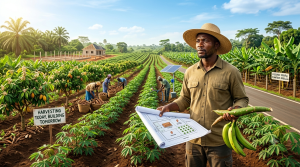
Land banking is simply buying undeveloped land today for a future purpose.
You aren’t building yet; you are just securing a few plots.
Investors do this because raw land in developing areas tends to cost far less than land in already developed areas. The bet is on tomorrow’s demand, not today’s convenience.
In Nigeria, this strategy has quietly become one of the most consistent wealth-building tools available to everyday earners. It doesn’t need a construction budget. It needs patience.
It has been argued that raw land beats finished buildings, and we are about to find out why.
Why Raw Land Beats a Finished Building for Long-Term Wealth
A building begins its depreciation journey the moment it’s completed, as paint begins to fade, roofs age, and occupants may get bored and decide to move out.
But land does the opposite.
Land has been in existence from the beginning of time and does not depreciate; rather, it appreciates instead.
The value of land climbs quietly and steadily even in an underdeveloped area; when road construction gets to such places, population presses toward it, and infrastructure catches up.
A practical comparison will give more context to the above explanation
Appreciation vs. Depreciation — The Core Argument for Land
Picture two friends with ₦10 million each. One builds a small shop. The other buys a plot on the edge of a growing town.
Five years later, the shop needs repainting and a new roof. Meanwhile, the plot is worth three times what he paid simply because the town grew toward it.
The Real Cost of Land Sitting Idle
Here’s the part most first-time land buyers miss: Idle land isn’t free to hold. There’s the risk of encroachment. There’s the opportunity cost of capital doing nothing.
An empty plot can also attract squatters, illegal dumping, or land grabbers testing whether anyone is watching. Silence, in land ownership, is sometimes read as absence.
That’s exactly why smart landowners are shifting toward monetizing the waiting period rather than just enduring it.
5 Ways to Monetize Developing Farmland Before You Build
You don’t have to choose between building now and earning nothing. There’s a third option, and it’s the one land-banking veterans quietly use.
- Seasonal Leasing to Local Farmers
Farmland doesn’t need a building to produce income. Leasing it out for a single planting season to local farmers can generate steady cash while you wait.
It also keeps the land visibly in use, which discourages disputes over unoccupied plots.
- Agroforestry and Fast-Yield Crops
Crops like cassava, plantain, or maize can be planted on land you don’t intend to touch for another two or three years. They mature fast and require modest input.
This turns “waiting land” into “working land” without delaying your eventual building plans.
- Structured Agribusiness Partnerships
Some landowners partner with agribusiness operators like the Farmer Circle, who bring the labor, inputs, and market access, while the landowner simply contributes the plot. At the end of the harvesting season, profits are shared according to the agreed percentage.
This model spreads risk and removes the burden of hands-on farm management from the investor.
- Land-Use Permits for Storage or Logistics
In areas near major roads, developing land can sometimes generate income as short-term storage or a staging ground for construction materials, produce, or equipment.
It’s not glamorous, but it’s rent collected on land that would otherwise sit empty.
- Community Farming Cooperatives
As a landowner, you can lease portions of larger plots to local farming cooperatives, splitting yield or profit at harvest.
This works especially well on land bought in bulk, where full personal use isn’t realistic in the short term.
Where Agribusiness Investment Outperforms Traditional Land Banking
Here’s where the math gets interesting. Traditional land banking waits for appreciation alone, where you buy, you hold, and you hope the area develops.
But structured agribusiness investment adds a second income stream on top of that appreciation: active crop revenue while the land itself continues to gain value.
The Feed Africa Global Project compares a ₦150 million duplex yielding around ₦3 million a year in rent with the same capital allocated to agricultural land instead.
It is worth noting that the above-mentioned figures come from Feed Africa’s internal modeling and research, not an independent audit.
And, as with any agricultural investment, actual outcomes depend on harvest performance, market prices, and execution, not on projections alone.
What the comparison highlights is a structural point worth taking seriously: land that produces something while it appreciates carries a different risk-and-reward profile than land that simply sits idle.
Whether that trade-off suits a particular investor still comes down to their own risk tolerance and due diligence.
Now, land investments are not without risks. Let me walk you through the red flags to watch out for.
Red Flags to Watch Before You Buy Developing Land in Nigeria
Not every “developing land” pitch deserves your money. A few checks can save years of regret.
- Verify the C of O or Deed of Assignment: A Certificate of Occupancy, or C of O, is the government’s official proof that you have the legal right to occupy and use a piece of land. Think of it as the land’s identity card.
Without one, your claim to that plot rests on trust and paperwork that courts may not fully honor. With one, your ownership becomes far harder to dispute.
Any serious land-banking decision in Nigeria should start with one question: is this land properly titled, and can that title be verified?
- Ask whether the land has ever been subject to a dispute or double allocation.
- Request physical inspection visits to verify the land’s actual location and availability.
- Since the intention is to cultivate these lands, there should be an actual soil test carried out to confirm the health of the land and which crops could be planted.
Check if there’s structured reporting, rather than vague promises of “future value.”
How to Choose the Right Land-Banking Partner
The right partner treats land banking as a managed asset, not a one-time sale. Look for deed-secured titles, transparent reporting, and a model that produces income while you wait, not just a plot number on a map.
As the case study above notes, the Feed Africa Global Project’s structure covers legal title, active planting, investor reporting, and optional site visits, reflecting the standard of seriousness land-banking investors should expect from any operator claiming to combine land security with agribusiness returns.
Conclusion: Turning Idle Land Into an Active Asset
Land banking was never meant to mean silent waiting. The best version of it puts idle land to work by leasing it, farming it, or structuring it as it climbs in value in the background.
Nigeria’s developing farmland offers exactly this kind of dual opportunity: title-secured ownership today and active income as tomorrow’s growth catches up.
The investors doing this well aren’t just buying land. They’re building a system where the waiting period pays for itself.