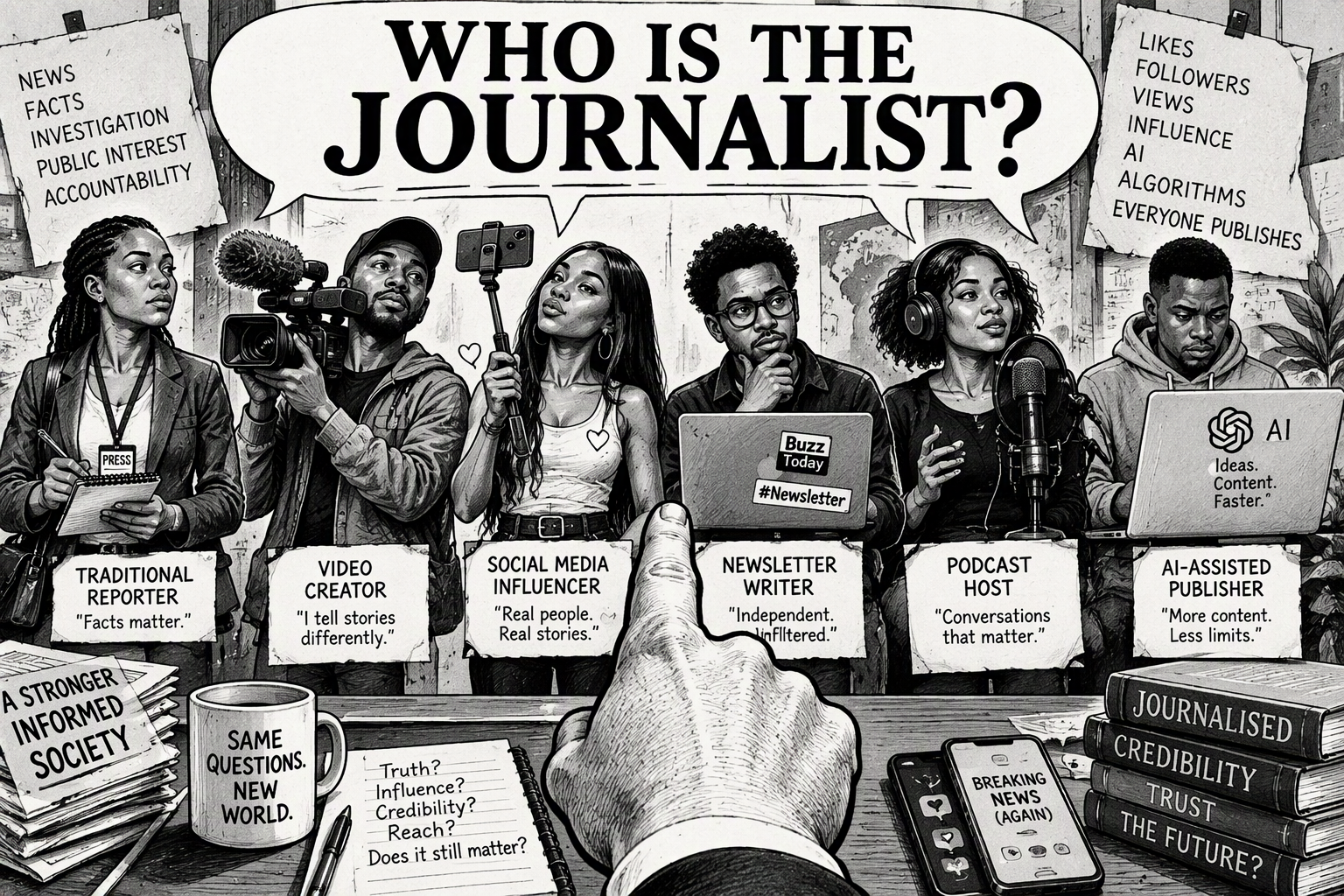
The internet broke down the barriers to publishing and gave journalists unprecedented reach. But in an era of algorithms, influencers and artificial intelligence, many are questioning whether the profession has become harder to sustain than ever before.
For decades, journalism was largely the preserve of established newspapers, magazines and broadcast institutions. Journalists relied on these organisations to reach audiences, while readers turned to familiar publications and broadcasters for information.
Then the internet changed everything.
Digital publishing dismantled many of the barriers that once restricted entry into the media industry. Newspapers moved online, new digital publications emerged, and independent journalists gained the ability to publish their work without the infrastructure and financial resources traditionally required to run a media organisation.
The possibilities seemed almost limitless. Journalists could reach audiences across geographical boundaries, establish independent publications and build careers outside traditional newsrooms.
But the freedom to publish has not necessarily translated into the freedom to thrive.
Today, getting a story published is arguably easier than ever. Getting people to read it is another matter.
News consumption has increasingly shifted towards social media platforms, video-sharing applications and search engines. Readers who once visited newspaper websites to catch up on current affairs can now encounter headlines, breaking news and commentary on Facebook, Instagram, TikTok and YouTube, sometimes without ever visiting the original publisher.
For journalists, this creates an uncomfortable reality. A story can take hours of research, interviews, fact-checking and writing, yet attract little attention. The journalist may have done the work, but the audience is not guaranteed.
And reaching that audience is increasingly tied to platforms whose algorithms, distribution priorities and commercial interests are beyond the journalist’s control. A change in how these platforms recommend content can affect visibility, readership and, ultimately, the revenue that sustains a publication.
There is also a changing relationship between journalism and the public. Influencers, independent commentators and content creators now compete for the same attention as professional journalists, often presenting news and current affairs in formats that are faster, more personal and more accessible. As these boundaries become less distinct, questions about credibility, professional recognition and the value of journalism become harder to ignore.
The internet promised to make journalism more accessible, independent and far-reaching. Yet, for many working in the profession, the challenge is no longer simply producing good journalism. It is finding an audience, earning a living and building a career in an industry whose economic and distribution models continue to change.
How confident are journalists about the future of their profession? Can independent and digital publications offer sustainable careers? And how long can journalists continue working in an industry where the ability to produce stories does not always translate into the ability to reach readers or earn a living?
BusinessWorld.Africa spoke with ten journalists about their experiences, the challenges confronting the profession and their expectations for the future of digital news reporting.